I. The 2025 Mental Health Landscape: A Global Imperative and Modern Stressors
A. Global Prevalence and Economic Toll: Understanding the “Billion Person Challenge”
The mental health challenge in 2025 is defined by unprecedented scale and urgency. Data released by the World Health Organization (WHO) confirms that more than 1 billion people globally are currently living with a mental health disorder. Conditions like anxiety and depression are pervasive across all communities, inflicting severe human suffering and contributing to staggering global economic losses.
Mental disorders represent the second largest cause of long-term disability worldwide, leading to significant loss of healthy life years and escalating health-care costs. This has positioned mental health as a central global public health priority, underscored by the WHO’s call for urgent scaling of services.
Considering the scale of impact, traditional one-on-one therapy models cannot meet the global demand. The need for highly scalable, evidence-based strategies validates the focus on digital delivery mechanisms and public health frameworks.
Proactive strategies, particularly early interventions in schools and communities, are essential. Acting earlier reduces the incidence and severity of mental illness while improving educational and social outcomes.
---
B. The Workplace Crisis: Burnout Statistics and the Digital Contribution
The workplace has become a powerful amplifier of mental health struggles, transforming burnout into a systemic organizational crisis.
- $322 billion: Annual global productivity loss due to burnout - $190 billion: Related healthcare costs - 8 in 10 employees experience burnout at least occasionally - 69% of remote workers attribute increased burnout to digital tools
The constant stream of notifications, pressure for instant responses, and erosion of work-life boundaries have created an environment where chronic digital strain is endemic.
---
C. The Paradox of Connection: Technology as a Tool and a Source of Strain
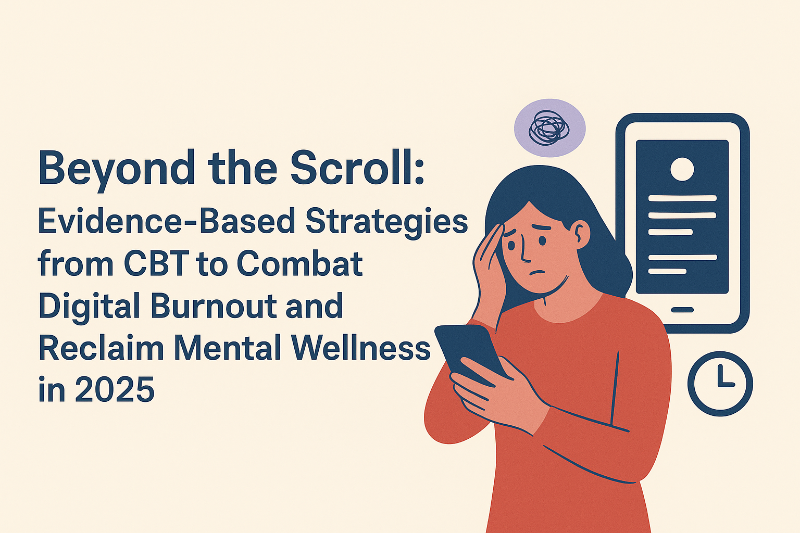
Technology is both a tool and a trigger for psychological distress.
- 4–6 hours of daily screen time → 23% higher anxiety and 35% higher depression risk - 6+ hours daily → 50% more anxiety, 88% more depression
Digital distraction also erodes relationships and productivity. Yet, when used mindfully, technology can reduce loneliness and provide educational or emotional support. The challenge lies in balancing benefits with intentional use.
---
II. Defining and Understanding Digital Strain and Burnout
A. Clinical Manifestations: Anxiety, Avoidance, and Physical Strain
Prolonged screen use contributes to Digital Eye Strain (DES) — headaches, fatigue, neck pain — now affecting up to 60% of children post-pandemic.
Compulsive “doomscrolling” often serves as a maladaptive coping mechanism for anxiety, reinforcing the illusion of control and increasing long-term distress.
---
B. The Ethics of Persuasive Design: Digital Addiction Mimicry
Many digital platforms are engineered for compulsion using persuasive design — push notifications, variable rewards, and streaks. These mechanisms mimic addictive behaviors, making “just taking a break” ineffective.
Evidence-based interventions must teach Noticing Design Tricks, empowering users to recognize and resist manipulative engagement patterns.
---
III. Foundational Evidence-Based Strategies: The Pillars of Wellness
A. Cognitive Behavioral Therapy (CBT) as the Clinical Cornerstone
CBT provides the foundation for most effective digital wellness strategies:
- 60–80% success rate for anxiety reduction - Equally effective as antidepressants for depression treatment
CBT equips individuals to identify triggers, restructure thought patterns, and challenge cognitive distortions — key for combating digital cognitive traps.
---
B. Lifestyle Interventions: The Bio-Psychological Axis
Physical health and mental health are deeply linked:
| Intervention | Target Condition | Evidence/Efficacy Summary | |---------------|-----------------|----------------------------| | CBT | Anxiety | 60–80% symptom reduction | | CBT vs. Medication | Depression | Equally effective as antidepressants | | Sleep Quality Improvement | Overall well-being | Strongest predictor of improved mental health | | Physical Activity | Anxiety, Depression | Boosts dopamine, endorphins, sleep quality |
Sleep, movement, and nutrition form the biological foundation for digital resilience.
---
C. Integrating Mindfulness and Acceptance
Mindfulness techniques — meditation, breathing, and awareness exercises — help counter compulsive digital engagement. By grounding attention in the present, users develop the emotional regulation necessary to disengage from constant alerts and distractions.
---
IV. Evidence-Based Frameworks for Digital Thriving
A. Applied CBT for Digital Cognitive Traps
Key thinking traps in digital life:
- Mindreading: “They saw my message but didn’t reply — they must be angry.” - All-or-Nothing Thinking: “Everyone on social media is happier than me.”
CBT encourages challenging these thoughts and finding evidence-based alternatives to reduce anxiety and comparison-driven distress.
---
B. Habit Science and Intentional Use
Building sustainable habits requires aligning digital behavior with core values:
- Centering Values: Identify what matters most (e.g., family, creativity) and assess whether digital habits align. - Noticing Design Tricks: Recognize how apps exploit attention. - Tackling Tech Habits: Design personalized “behavioral interruptions” to replace compulsive scrolling.
These tools create Digital Agency — the ability to use technology intentionally, not reactively.
---
The Digital Thriving Framework
| Strategy | Basis | Application | Goal | |-----------|--------|-------------|------| | Steering Clear of Thinking Traps | CBT | Identify & challenge cognitive distortions | Reduce digital stress | | Centering Values | Values-Based Therapy | Align tech use with goals | Increase satisfaction | | Noticing Design Tricks | Persuasive Tech Literacy | Recognize manipulation | Reclaim agency | | Tackling Tech Habits | Habit Science | Replace compulsive use | Build healthy routines |
---
V. Systemic and Emerging Solutions
A. Digital Therapeutics (DTx): Expanding Access and Clinical Validation
Digital Therapeutics (DTx) are software-based medical interventions delivering clinically validated care (e.g., digital CBT). Validated DTx, like CBT for Insomnia, outperform medication and in-person therapy for symptom reduction.
Key implementation models (e.g., Germany’s DiGA program) demonstrate how blending human support with digital tools increases adherence and impact.
---
B. Organizational Interventions: Multi-Level Workplace Wellness
Multi-Level Workplace Mental Health Programs (WMHPs) integrate individual wellness with structural reforms.
- 6+ month programs show 3× greater effect sizes - Leadership engagement boosts uptake by 58% - Cultural change increases productivity by 28% while reducing burnout
Organizations must structurally support mental health through flexible schedules, active breaks, and systemic well-being policies.
---
VI. Conclusion: The Actionable Roadmap for Mental Wellness
1. Prioritize Foundational Resilience
Focus on sleep, exercise, and nutrition to strengthen biological foundations.2. Cultivate Digital Agency
Apply CBT and habit science to reclaim control over digital engagement.3. Drive Systemic Support
Adopt organizational and therapeutic frameworks that scale mental health care ethically and effectively.---
Final Thought
Reclaiming mental wellness in 2025 means regaining agency over technology. With evidence-based tools from CBT, mindfulness, and digital therapeutics, individuals and organizations can ensure that connectivity enhances — rather than erodes — well-being.