Mental Health Introduction
The scale of mental health challenges globally constitutes one of the most pressing public health priorities of this decade. According to recent data released by the World Health Organization (WHO), more than 1 billion people are living with mental health disorders worldwide, imposing immense human and economic tolls.¹ Among these conditions, anxiety disorders are the most common group globally, affecting approximately 359 million people as of 2021.² These conditions are not merely issues of personal distress; they represent the second biggest reason for long-term disability, contributing significantly to lost healthy life and substantial economic losses across all nations.¹
The pervasive impact of chronic mental distress elevates the discussion of mental health care from an individual issue to a fundamental requirement for community and economic vitality. Investing in mental health is an essential investment in people and economies, necessitating urgent action globally to scale up support services.¹
---
The Pervasive Nature of Generalized Anxiety Disorder (GAD)
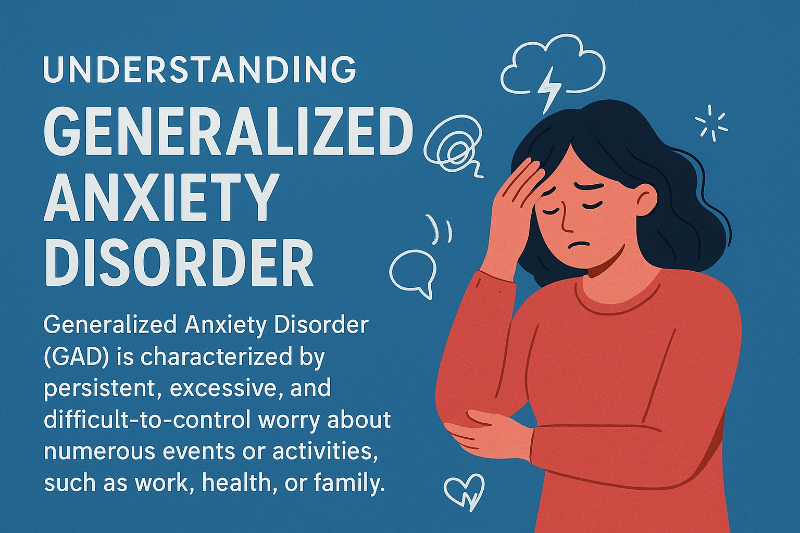
Generalized Anxiety Disorder (GAD) is characterized by persistent, excessive, and difficult-to-control worry about numerous events or activities, such as work, health, or family.² Unlike situational anxiety, this worry is constant and often accompanied by debilitating physical symptoms, including trouble sleeping, heart palpitations, sweating, trembling, or abdominal distress.² GAD often begins early, with symptoms frequently having their onset during childhood or adolescence, and is associated with an increased risk for depression and substance use disorders.²
Despite the high prevalence and profound impact of anxiety disorders, access to appropriate support remains a critical challenge. Systemic barriers mean that only approximately 1 in 4 people affected by anxiety disorders receive treatment.² This immense gap between need and access underscores the urgency of identifying and promoting highly effective, evidence-based strategies that individuals can integrate into their daily lives.
Exacerbating these challenges are modern environmental factors. Research published in March 2025 highlighted the compounding role of technology, showing that among young people in clinical care for depression and anxiety, problematic social media use—defined by feelings of discontent or upset when not engaging with the platforms—was associated with higher symptom severity.³ This finding suggests that while biological vulnerabilities are significant, the persistent connectivity demands of the modern era can intensify the experience of anxiety symptoms.
The current understanding of GAD must, therefore, embrace both its deep biological roots and the necessity of targeted behavioral and lifestyle strategies to regain emotional regulation and mitigate the treatment access crisis.
---
2. Scientific Foundation
Generalized Anxiety Disorder is a complex condition rooted in the neurobiology of fear, emotion, and cognitive control. Scientific inquiry has moved beyond broad conceptualizations of anxiety to identify specific neurotransmitter systems and neural circuits responsible for chronic worry.
The Neurochemical Basis of Chronic Worry
The brain’s ability to transition into states of calm is heavily dependent on the proper functioning of the Gamma-Aminobutyric Acid (GABA) system. GABA is the principal inhibitory neurotransmitter, acting as a crucial "brake" that reduces overall neuronal excitability.⁵ In individuals with anxiety disorders, dysfunction in the GABAergic system—such as reduced GABA levels or altered receptor function—is implicated, leading to the heightened, persistent neuronal activity that characterizes anxiety.⁵
While the GABA system is critical, the pathophysiology of GAD also involves complex interactions with other key mood regulators. The serotonin (5-HT) and norepinephrine (NE) systems play significant roles, governing mood, stress response, and vigilance.⁶ The complexity of this interplay is evidenced by the fact that first-line pharmacological treatments often target these systems, utilizing SSRIs and SNRIs to modulate neuronal firing rates and increase neurotransmitter availability in the synaptic cleft.⁷
---
Key Brain Circuits and Regulatory Mechanisms
The amygdala is the brain’s central processing hub for fear and emotional threat, often referred to as the "alarm center." Hyperactivity and persistent, inappropriate signaling within the amygdala are hallmarks of anxiety disorders. Researchers at Weill Cornell Medicine identified that activating the metabotropic glutamate receptor 2 (mGluR2) within a specific neural circuit reduced anxiety in preclinical models.⁸
Crucially, emotional regulation also depends on top-down control from the medial prefrontal cortex (mPFC), which governs cognitive appraisal and suppression of emotional impulses. Evidence shows that the mPFC mediates the relationship between anxiety and perceived social support, explaining why social connection can biologically buffer anxiety.⁹
---
Etiology: Genes, Environment, and Epigenetic Risk
GAD arises from multiple interacting factors. Genetic vulnerability confers a 25% increased risk if a first-degree relative has the disorder.¹⁰ Environmental stressors—like chronic stress, trauma, or abuse—contribute significantly.¹⁰
Epigenetic research shows that early life stress can cause lasting changes in gene expression, including altered DNA methylation of stress-response genes (e.g., NR3C1), even in utero.¹¹ These findings underscore the dynamic gene-environment interaction shaping GAD risk.
---
Table 1: Key Neurotransmitters and Brain Regions in GAD
| Neurotransmitter/Region | Role in Anxiety Regulation | Dysregulation in GAD | |--------------------------|-----------------------------|----------------------| | Gamma-Aminobutyric Acid (GABA) | Primary inhibitory neurotransmitter; promotes relaxation. | Reduced levels or altered receptor function.⁵ | | Serotonin (5-HT) | Modulates mood, sleep, and appetite. | Complex dysregulation; targeted by SSRIs/SNRIs.⁶ | | Amygdala | Central to processing fear and threat. | Hyperactivity and persistent danger response.⁸ | | Medial Prefrontal Cortex (mPFC) | Top-down regulation of emotion. | Impaired regulation; linked to low social support.⁹ |
---
3. Evidence-Based Strategies
Effective management of GAD relies on integrated, evidence-based strategies targeting both cognitive and physiological systems.
Strategy 1: Cognitive Behavioral Skills – Cognitive Restructuring
Cognitive Behavioral Therapy (CBT) is the most effective psychotherapy for GAD.¹² It focuses on cognitive restructuring, teaching individuals to identify, challenge, and replace automatic negative thoughts (ANTs).¹⁴
Technique: “Catch It, Check It, Change It”
1. Catch It: Record the anxious thought. 2. Check It: Evaluate the evidence for and against it. 3. Change It: Replace it with a balanced, realistic alternative.¹⁴
Regular practice strengthens the mPFC, improving control over amygdala-driven fear.
---
Strategy 2: Mind-Body Regulation – Grounding and Vagal Stimulation
Grounding techniques interrupt the fight-or-flight response by engaging external sensory focus.
5-4-3-2-1 Sensory Grounding: - 5 things you can see - 4 things you can touch - 3 things you can hear - 2 things you can smell - 1 thing you can taste¹⁶
Vagus Nerve Engagement: Techniques such as 3-Minute Breathing Space or endurance exercise activate the parasympathetic nervous system, reducing anxiety.¹⁸ ²⁰
---
Strategy 3: Movement and Exercise for Neurochemical Balance
Regular exercise lowers anxiety and enhances stress resilience. Physically active people show a 25% lower risk of developing anxiety over five years.²¹
Implementation: The 5×30 Rule Perform 30 minutes of moderate-to-high intensity activity, 3–5 times per week.²¹
---
Strategy 4: The Gut-Brain Axis and Dietary Intervention
The Gut-Brain Axis links the microbiome and nervous system. Dysbiosis can trigger overactivation of the HPA axis, increasing cortisol and anxiety.²³
Intervention: Probiotic supplementation—especially Lactobacillus strains—has been shown to reduce anxiety symptoms.²³ ²⁴
---
Strategy 5: Foundational Sleep Hygiene
Anxiety and insomnia reinforce each other. Effective sleep hygiene breaks this cycle.²⁵ ²⁶
Protocol: - Maintain a consistent sleep schedule. - Allocate dedicated “worry time” earlier in the evening. - Keep the bedroom dark, quiet, and cool.²⁵
---
Table 2: Summary of Proven Strategies and Techniques
| Strategy | Core Mechanism | Actionable Technique | Expected Outcomes | |-----------|----------------|----------------------|------------------| | Cognitive Restructuring | Builds balanced thinking; strengthens mPFC. | “Catch It, Check It, Change It.” | Reduced worry (4–8 weeks). | | Mindfulness & Grounding | Interrupts acute anxiety response. | 5-4-3-2-1 technique; mindful breathing. | Immediate relief (1–5 min). | | Aerobic Exercise | Stimulates Vagus nerve; regulates stress. | 5×30 min per week. | Reduced anxiety (6–12 weeks). | | Gut Health Modulation | Balances microbiota; regulates cortisol. | Targeted probiotic supplementation. | Improved stability (1–3 months). | | Sleep Hygiene | Breaks anxiety-insomnia loop. | Regular schedule, worry time, environment control. | Better sleep, less anxiety (2–4 weeks). |
---
4. Professional Support & Resources
While self-management is valuable, GAD often requires professional intervention.
When to Seek Help
Seek help if anxiety impairs work, relationships, or sleep, or if self-help strategies fail.² Immediate help is essential for suicidal thoughts.
---
Types of Therapy
- CBT: Gold standard; short-term and skills-focused.¹² - Exposure Therapy: Safely confronts fears.¹³ - e-CBT: Digital CBT with comparable results, expanding access.²⁷ ²⁸
---
Pharmacological Treatments
First-line medications: SSRIs and SNRIs.⁷ Other options include pregabalin, buspirone, and certain antipsychotics or antihistamines.²⁹ Emerging research explores psychedelics, ketamine, and orexin or endocannabinoid modulators.²⁹
---
Addressing Barriers and Access
Stigma, cost, and language barriers remain major challenges.³⁰ Global initiatives like World Mental Health Day 2025 advocate for universal mental health care as a human right.¹
---
5. Conclusion
Generalized Anxiety Disorder is common but highly manageable. Understanding its neurobiological roots empowers individuals to apply evidence-based interventions that strengthen both cognitive and physiological resilience.
Integrating CBT, grounding, exercise, gut health, and sleep hygiene builds long-term emotional stability. As access to e-CBT and targeted pharmacological options expands, hope for effective treatment continues to grow.
---
Medical Disclaimer
The information presented is for educational purposes only and not a substitute for professional medical advice, diagnosis, or treatment. Always seek guidance from a licensed healthcare provider before making changes to your health regimen.³¹ If experiencing a mental health crisis, contact emergency services immediately.
---